STUDIO December 2, 2023
Logo Design: Purpose and Essential Qualities
What a logo is, what it should accomplish and the six qualities that make a mark useful over time.
A logo is a compact identifier for a brand. It cannot carry every message on its own, but it can make an organisation recognisable and provide a stable anchor for the wider visual identity.
What a logo is for
People encounter hundreds of visual marks every day. A successful logo helps them distinguish one organisation from another, recall a previous experience and connect many communications to the same source. Its value comes from consistent use and the meaning the organisation builds around it.
1. Original
A mark should be recognisable within its category without imitating the category leader. Originality is not novelty for its own sake; it is a distinctive response to the brand’s own strategy and context.
2. Timeless
Trends can inform an identity, but they should not define its foundation. A durable logo avoids effects that date quickly and relies on a clear underlying idea.
3. Simple and memorable
Simplicity makes a mark easier to recognise, reproduce and remember. Every element should have a reason to exist. Removing noise usually strengthens the idea.
4. Relevant
The form, typography and tone should fit the organisation, its audience and its ambition. Relevance does not require an obvious picture of the product; it requires the right character.
5. Versatile
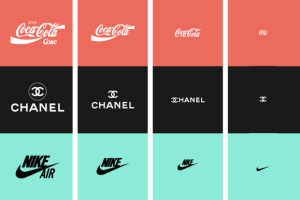
A logo must work in one colour and full colour, at small and large sizes, on screen and in print. Responsive variants can preserve recognition when the available space changes.
The identity is larger than the mark
The logo is only one component. Typography, colour, layout, motion, imagery and language turn it into a complete visual and verbal system. The strongest identities design these elements to work together.